The Protective Feature of Armored Cables
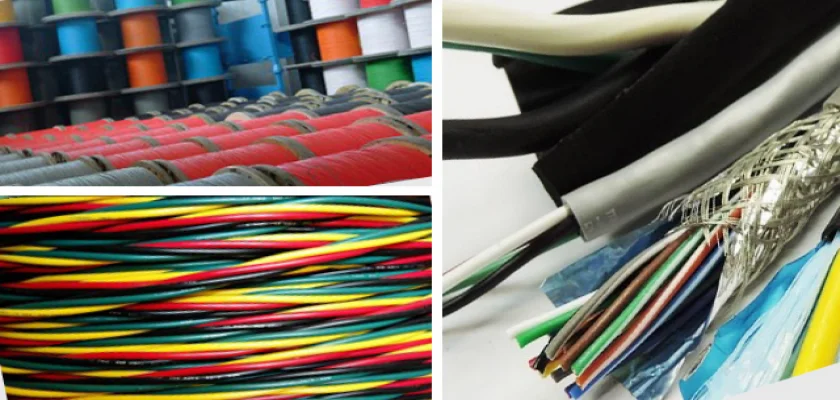
From the time electricity was discovered to the present day, wires made of copper or aluminum, consisting of a single or many thin strands, covered with a plastic insulating material, that do not reflect the current passing through them to the outside, are called
. These cables vary according to their place of use, and the amount and thickness of the wires inside also vary according to the activities in their fields of use. While thin cables are sufficient for areas requiring low current, thicker and multi-strand cables are necessary for areas with high current. Cables are used extensively in every area where electrical energy is needed, from power transmission and distribution to signal transmission, such as high current, low current, and signal transmission. Therefore, it is of great importance that they perform their duties in the best way in all external and internal areas, and that no harm comes to those around.
One of the main components of a cable, which is of great importance for the transmission of electric current and has insulating and sheathing conductor properties, is its armoring feature. This armoring is generally used in cables as an intermediate sheath, or as another separator or filler. The main purpose of armoring is to provide mechanical protection.
Examples of Armoring Types
Armoring types, which differ among themselves, also differ from each other in terms of their technical specifications. For example, SWA steel wire armor, which is used in all areas, is quite good in terms of mechanical and tensile strength. At the same time, because it is wire-type armoring, it also shows resistance to rodents. SWB steel wire mesh armoring has a smaller cable diameter compared to the other armor type. It is lighter than SWA. While mechanical protection is good, it also has bending properties. In short, it provides mechanical protection against cutting, crushing, impact, rodents, or external factors caused by external physical means. It also provides grounding and shielding properties. The features within the specific armoring types have certain changes in coverage and material ratio. Coverage is defined as the ratio of the area covering the top of the core.