
The Importance of Foreign Language Learning in Children

Children starting to learn a foreign language at an early age provide a great advantage in terms of mental development and future academic success. Children who start learning a language at a young age learn vocabulary and grammar rules in a natural process. It becomes easier for them to understand not only the grammar of the language but also its cultural context. Foreign languages learned at an early age develop children's cognitive abilities and increase their creative thinking skills. Furthermore, learning a second language can help children be more successful in other academic areas. For example, skills such as problem-solving, memory development, and concentration develop in parallel with the language learning process. For information on this subject and to ask questions you are curious about, you can look at the relevant online companies on the internet pages and examine them in detail from here.
Advantages of Learning a Foreign Language at an Early Age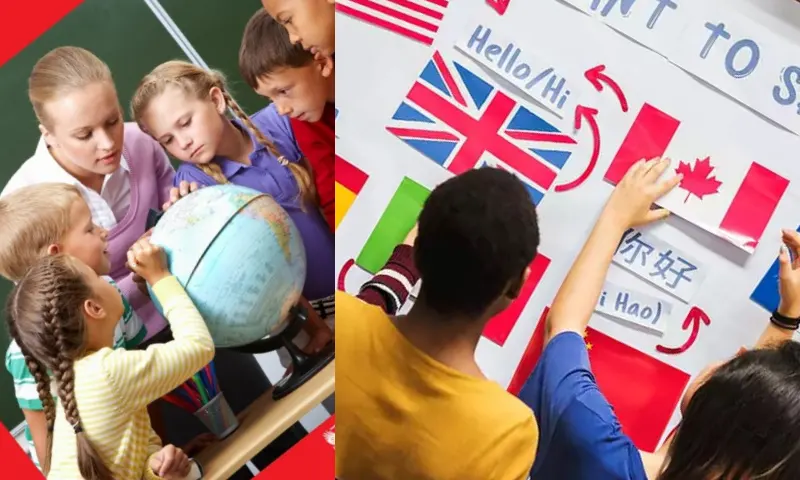
One of the most important advantages of learning a foreign language at an early age is that children can distinguish the sounds and tones of the language more easily. The brain is more flexible in grasping new sounds and language structures during language learning. This way, children learn a language more naturally and can speak with an accent close to their native language. Also, children see the language learning process as a fun game at this age, which increases their motivation. Learning a foreign language also develops children's social skills. They become more open to different cultures and people, which makes them more empathetic and tolerant individuals. Children who learn multiple languages at an early age can communicate more comfortably in multilingual and multicultural environments in the future.
Methods of Teaching Foreign Languages to Children
One of the most effective methods of teaching foreign languages to children is to encourage learning through games and activities. Children acquire information more easily when they have fun and interact during the learning process. Therefore, supporting foreign language learning with games, songs, and stories ensures that the language is learned permanently. Furthermore, using visual and auditory materials when teaching foreign languages to children is also quite effective. Animations, videos, cartoons, and interactive applications attract children's attention and speed up the language learning process. Regular repetition also plays a significant role in language learning. Continuous repetition by children ensures that words and language structures are embedded in their memory. These methods make the language learning process more enjoyable and effective for children.